
How to memorise English quotes easily
The requirement to have English quotes memorised sucks. Here’s how to make it not suck. This technique helped me get a Band 6 in English Advanced with minimal study. It is highly versatile. I used it to memorise my Hitler creative, and also information from other subjects.
Most people will memorise by spending many hours mindlessly writing quotes out again and again. It sucks up a lot of time that could be spent doing something more productive, or for me, napping. Making matters worse, these quotes then need to be re-memorised by the time the next assessment or HSC externals comes around. There is a better way.
The mind palace technique has been used since ancient times to commit massive amounts of information to long-term memory in a relatively short time. It is simple and can be learnt by anyone. By using this technique you can memorise your quotes much quicker. The best part is that information memorised with this method can be rapidly refreshed before an impending English exam. My memorisation for English Paper 1 consisted of just 30 minutes of going over my quotes the night before.
The technique works by exploiting the fact that no one ever forgets where the bathroom in their house is. Our brains are very good at remembering spatial information. The mind palace essentially involves converting abstract information (like an English quote) into spatial information so that our brains will remember it easily. You imagine yourself going on a journey through a location you know well, such as your house. Each distinctive sub-location in that location becomes a container where you can store information. For example, you start at the front door of your house and going clockwise, you might have a window with a shoe rack below it. That window becomes one sub-location where you can store information, and the shoe rack a second sub-location. You then take the English quote you are going to memorise, and break it down into each idea. Visualise an action that could happen at the sub-location that represents that idea, then more on to the another sub-location for each idea that you have. You then close your eyes and recall the quote by taking a mental journey around your location, using the visualisations to help you remember each part of the quote, and continue this process for each quote. The more vivid and memorable the visualisation, the easier it will be to remember it later.
For example, take this quote from Shakespeare’s Macbeth “Stars hide your fires, let not light see my black and deep desires”. We might imagine a flaming shooting star smashing through the window and then turning black to visualise the first part of the quote “Stars hide your fires”. The rest of the quote might be remembered by visualising a black hole that opens up underneath the shoe rack in the shape of a heart (symbolising Macbeth’s desires) and sucks everything deep inside. Then when we need to recall this quote, we can imagine ourselves just inside our house by the front door, and see the visualisations at the window, then the shoe rack. By using powerful visualisations like these and associating it with a physical location we know well, we have created a mind palace which will enable us to recall the quote.
To ensure these quotes stay within long-term memory. We can take advantage of the forgetting curve.
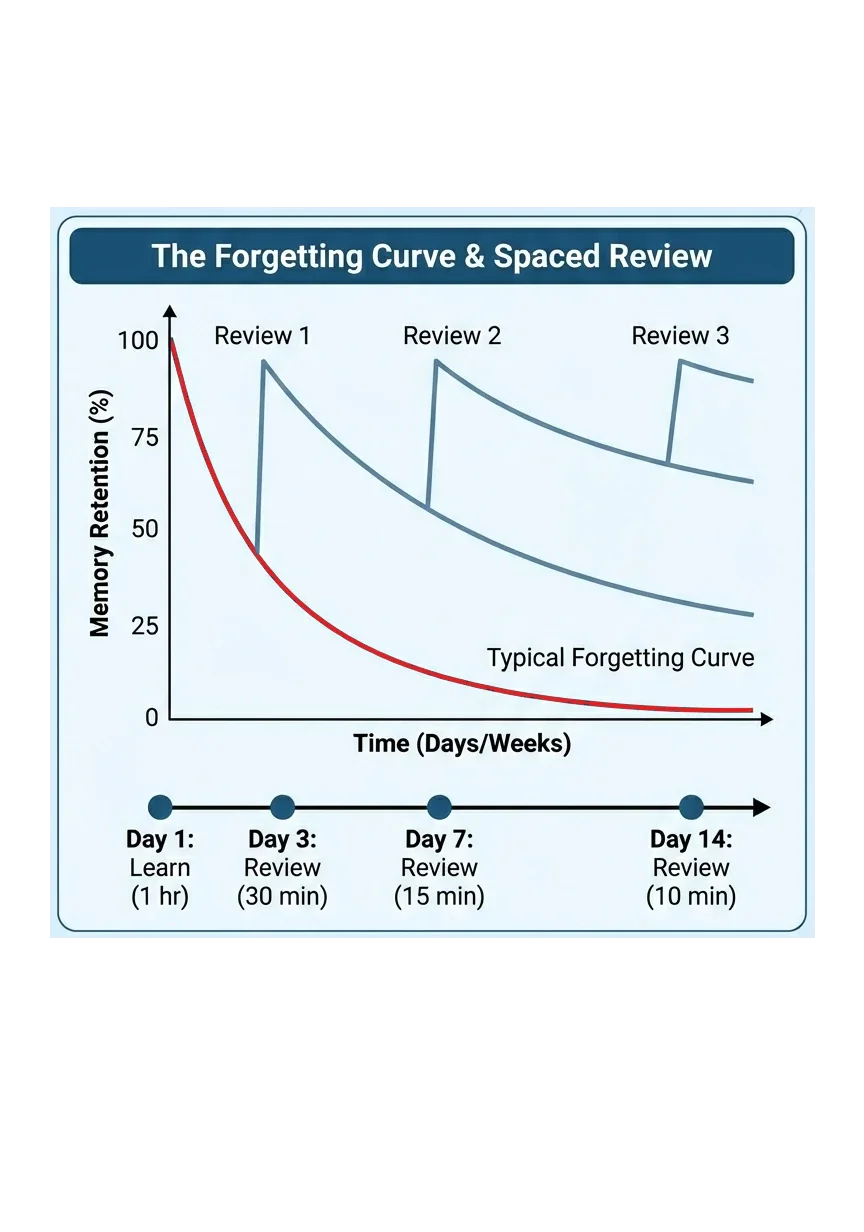
By revising quotes in this way in steadily increasing intervals, the quotes will become more and more established in your memory. You will be surprised at what you can retain even weeks after initially remembering something.
This method requires a bit more thought compared to mindlessly writing your quotes out. But it is extremely effective and will potentially save you hours of time.
If you’re interested in efficient study methods, you can download my free guide here.
